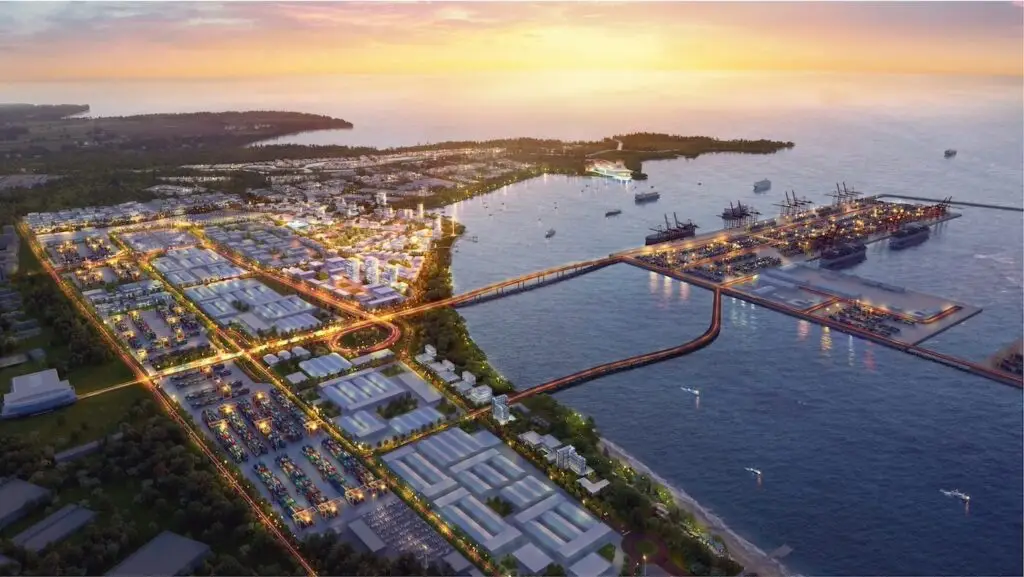
The Patimban Port project was not merely the construction of new infrastructure. It emerged from a convergence of national necessity, political dynamics, and the courage to take a position within a long-established industry structure.
Initially, the development of a new port was planned for Cilamaya. However, the plan was rejected due to concerns that it could disrupt pipelines owned by the state-owned oil company Pertamina. This situation compelled the government to seek an alternative. The proposal to relocate the project to Patimban gained traction and was later designated as a National Strategic Project during the administration of Susilo Bambang Yudhoyono, supported by basic infrastructure financing through a loan from the Japan International Cooperation Agency (JICA).
Yet physical construction was only part of the story. The real challenge emerged when the government had to determine who would operate the port under a Public-Private Partnership (PPP) scheme, granting a 40-year concession through a competitive tender process.
It was at this stage that Yukki Hanafi’s role became significant.
For decades, Indonesia’s port industry had been dominated by PT Pelabuhan Indonesia (Pelindo). Entering this sector meant confronting a deeply entrenched structure with longstanding interests. At the same time, Pelabuhan Tanjung Priok was experiencing increasing capacity pressure and severe logistics bottlenecks. From a macro perspective, the need for an alternative port had become urgent.
Yukki Hanafi recognized this strategic opening.
He understood that Patimban was not merely a port project, but a pivotal moment to introduce a new model: a public port financed by the state yet operated by a private entity. Through a carefully structured strategy—ranging from positioning and partner consolidation to engagement with policymakers—he steered Interport to enter and ultimately win the concession tender.
Interport’s victory was not simply an administrative outcome. It was the result of a strategic architecture designed from the outset: framing Patimban as a national bottleneck solution, as a greenfield project with expansion capacity reaching millions of TEUs, and as an ecosystem integrated with industrial zones.
The project’s legitimacy was further reinforced when global operator Mediterranean Shipping Company (MSC) became involved. This development signaled that Patimban was not an experimental undertaking, but a strategic asset with international appeal.
Ultimately, the story of Patimban is one of national vision meeting individual execution. While many stakeholders were involved in its long journey, Yukki Hanafi’s role stands out for one defining contribution: transforming policy opportunity into strategic achievement.
Without the willingness to enter a tightly structured industry, without precise lobbying and positioning, and without the ability to read the momentum of national logistics reform, Patimban might have remained a concept on paper.
Through strategic leadership, the project moved from vision to reality—opening a new chapter in Indonesia’s port industry.